

How ClinicSpots Digital Services Helped Vanguard Men’s Health & Endocrine Grow Bookings 96% in 6 Months

%
Increase In Website Leads
%
Increase in Impressions
Monthly Organic Visits
%
Increase in GMB calls
The Challenge
The central problem was that a capable clinic in a high-value niche was invisible exactly when patients were searching. When a man in the Frisco area looked for testosterone treatment nearby, the practice did not appear in the local map pack or anywhere near the first page. Testosterone therapy is a competitive, commercially valuable search category, and every missed ranking hands a high-intent patient straight to a rival clinic, regardless of clinical quality.
Several structural issues compounded the problem at once. The website had thin, slow pages and no real SEO foundation, so search engines struggled to understand or trust it. The clinic offered several related services, from testosterone therapy and low-T evaluation to broader hormone optimization, yet had almost no dedicated content for any of them, so it could not rank for the specific treatments men were searching. The single Google Business Profile was under-optimized and carried a thin review profile in a category where trust and discretion matter enormously. On top of that, the site had zero presence in AI-driven search, so men asking assistants for a recommendation never encountered it. For a specialty practice competing on local intent, this combination was costing valuable appointments every week.
The Solution
Our strategy started from a simple conviction: rebuild the foundation first, then dominate how local patients actually search. Rather than chase broad or national terms, we concentrated the campaign on high-intent, local, service-specific queries, the exact phrases a man types when he is ready to book a testosterone consultation. This focus is what defines effective SEO services for healthcare practices, and it informed every decision that followed.
The plan rested on five connected pillars rather than a scatter of disconnected tactics. First, a technical and on-page rebuild to give the site a foundation search engines could trust. Second, a local SEO and Google Business Profile overhaul to win the map pack. Third, a structured review-generation program to build the discreet social proof this category demands. Fourth, a service-specific content library so each treatment could rank in its own right. Fifth, a generative engine optimization layer to capture AI-driven discovery. Each pillar fed the next, and together they formed a single coordinated campaign rather than a checklist of isolated tasks.
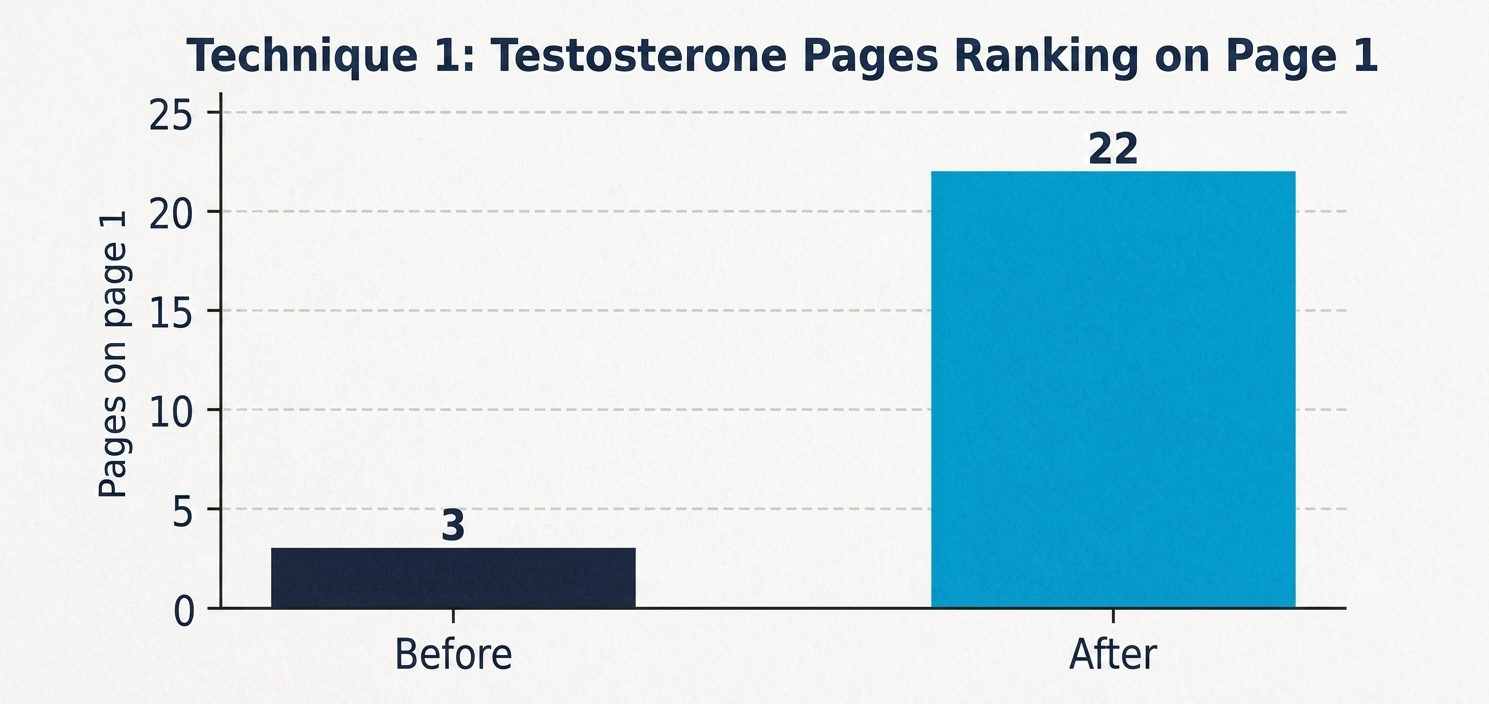
Technique 1: Technical and On-Page Rebuild
We started at the foundation, rebuilding the slow, thin pages into a fast, properly structured site that search engines could crawl and trust. That meant fixing page speed and mobile performance, establishing a clean URL and heading structure, and creating dedicated, optimized pages for each core treatment rather than burying everything on one generic page. This groundwork lifted the number of testosterone and hormone pages actually ranking on page one from a handful to more than twenty, giving the practice real surface area in search for the first time.
Technique 2: Local SEO and Google Business Profile Overhaul
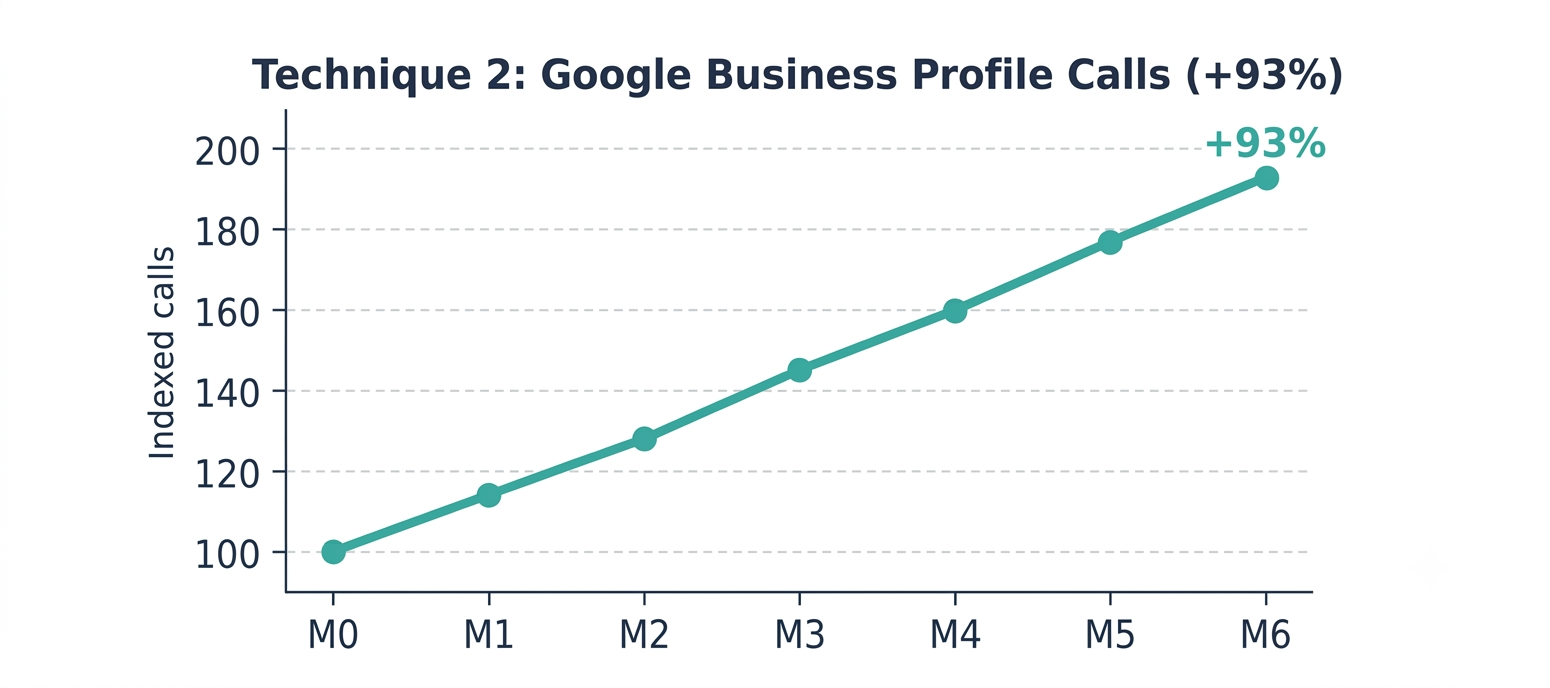
With the site foundation in place, we turned to local search, where this practice would win or lose its market. We rebuilt the Google Business Profile with accurate categories, a complete service list, geo-tagged photos, and consistent name, address, and phone details, then aligned the site with local citations across the web. The clinic climbed into the Frisco map pack for its core terms, and profile calls rose sharply as the practice finally appeared at the exact moment nearby men were searching for help.
Technique 3: Structured Review Generation
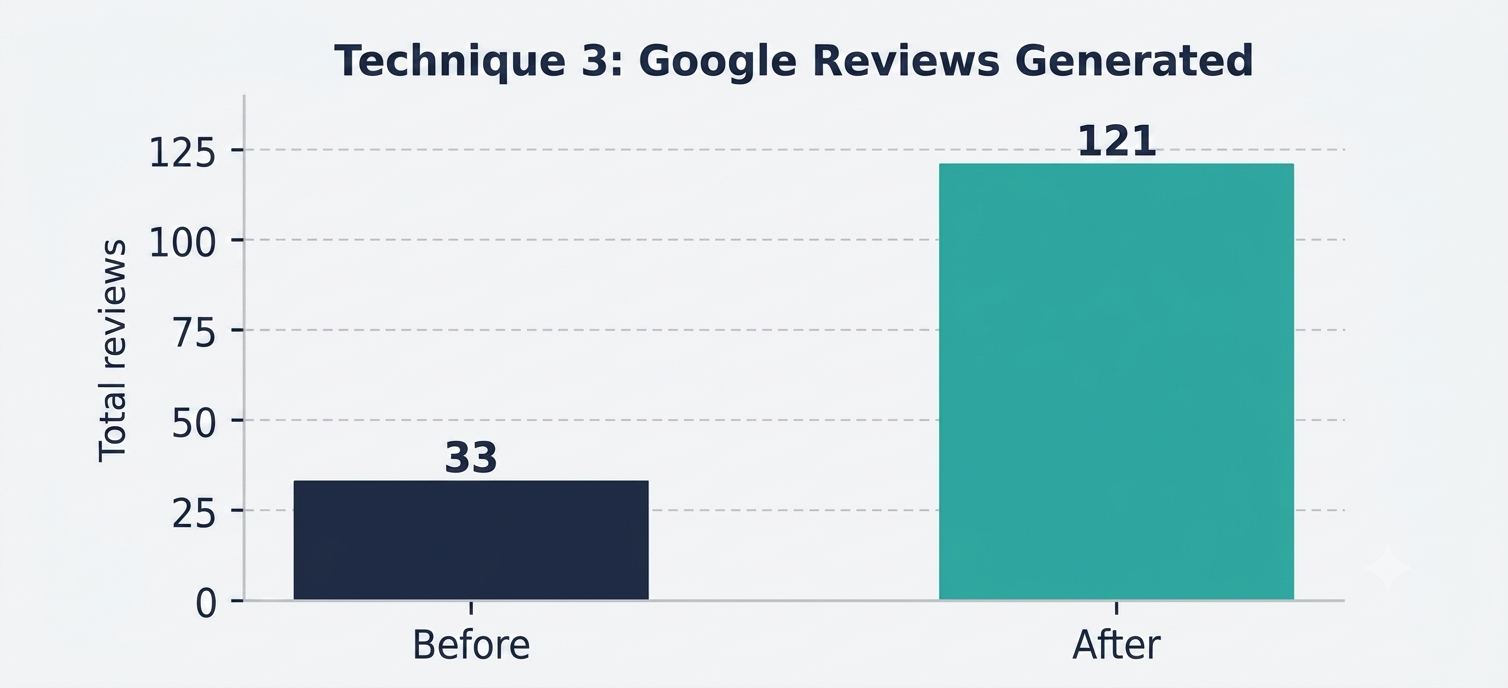
In a sensitive, high-value category, discreet social proof often decides between two nearby clinics, so we built a structured workflow to request, capture, and showcase patient reviews at the right moments in the care journey. This steadily grew both the volume and the recency of reviews on the Google Business Profile, two of the strongest local ranking and trust signals there are. The richer review profile lifted map pack visibility and gave hesitant patients the reassurance they needed to choose Vanguard over a competitor.
Technique 4: Service-Specific Content Library
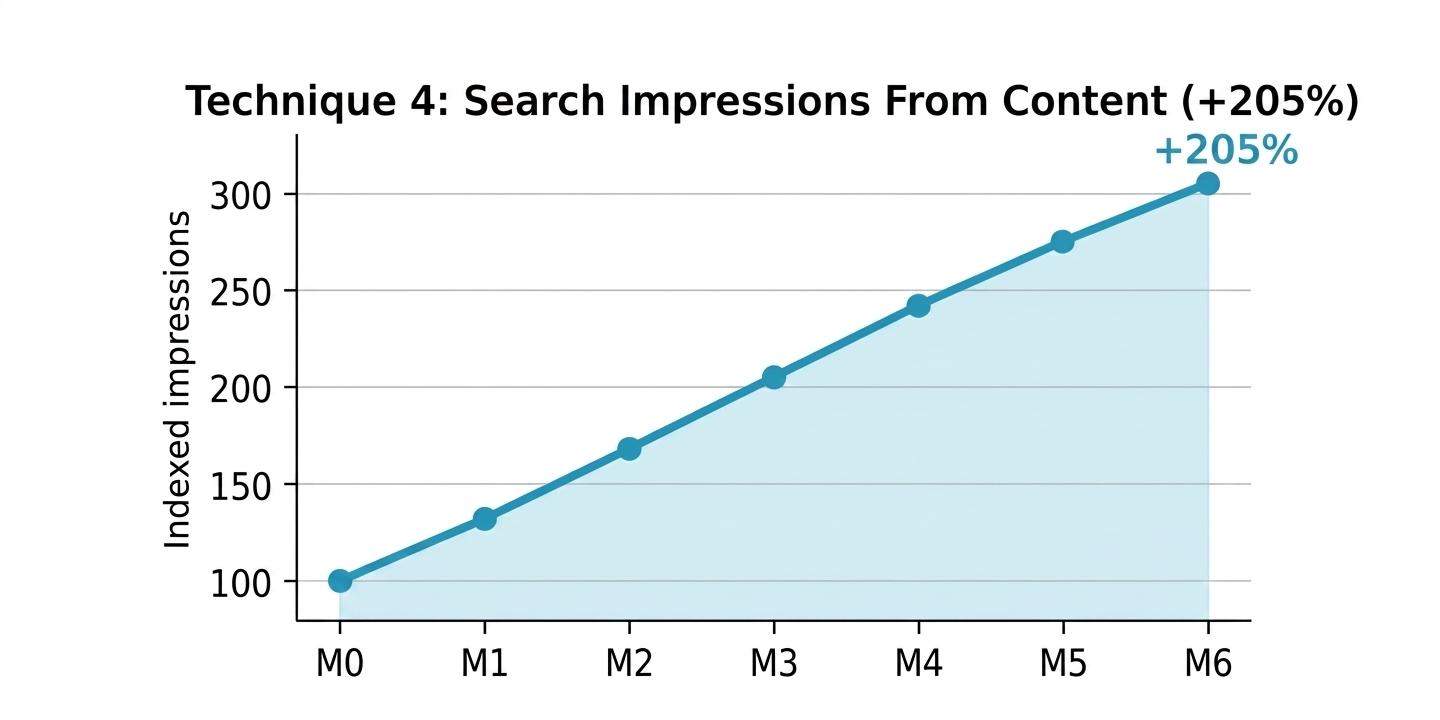
Next we built out genuinely useful content for each service the clinic offers, written to answer the questions men ask before booking testosterone therapy or a low-T evaluation. We supported this content with links to credible authorities such as the Endocrine Society on testosterone and NIDDK endocrine disease resources, which strengthened topical authority and gave readers trustworthy next steps. As the library matured, search impressions climbed steadily, feeding the top of the patient funnel month after month.
Technique 5: Generative Engine Optimization
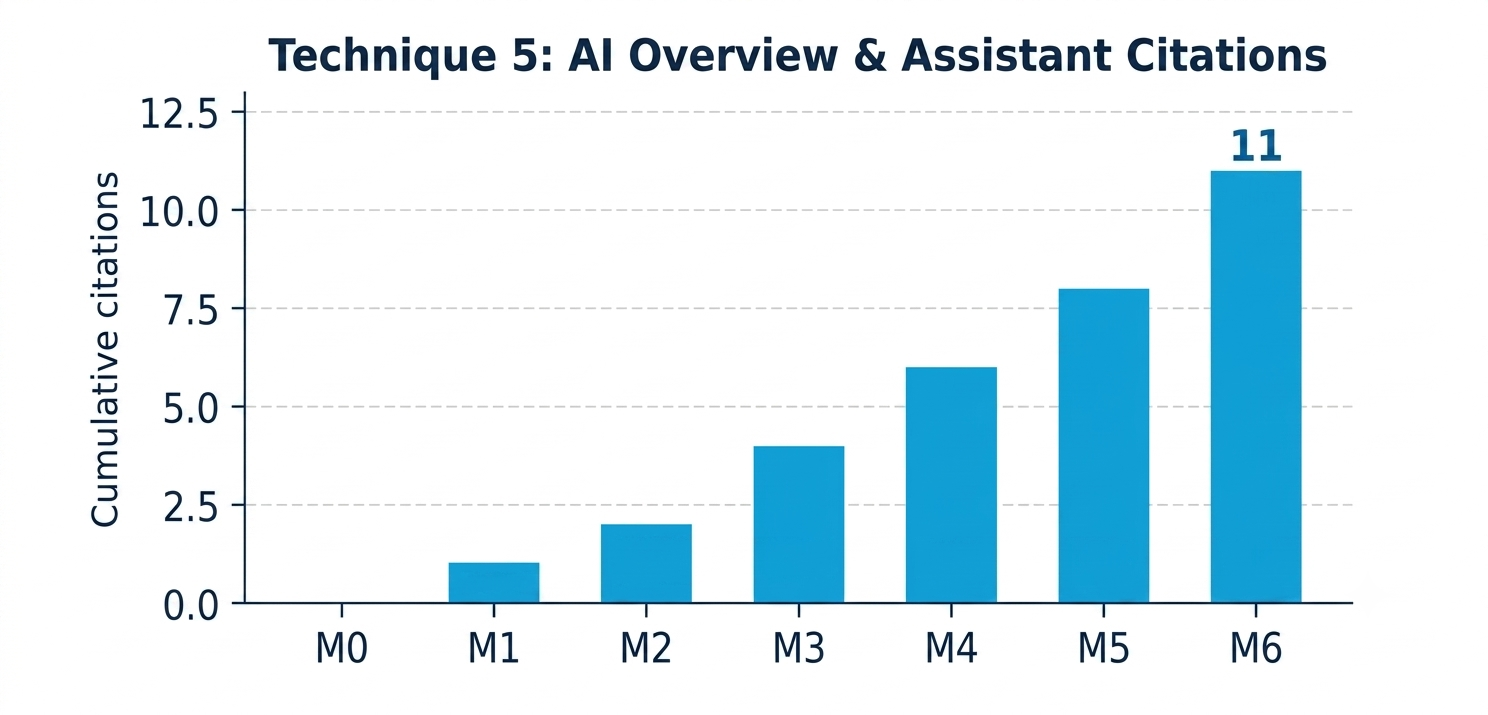
Finally, we restructured key content into the clear, citable, question-and-answer formats that large language models favor, then reinforced the clinic entity across the web so assistants could recognize and recommend it. The goal was straightforward: when a Frisco man asks an AI assistant for a testosterone treatment recommendation, Vanguard Men’s Health & Endocrine should be part of the answer. Over the engagement the practice accumulated steady citations in AI Overviews and assistant responses, a channel its competitors had left wide open. You can see how we approach this across other healthcare digital marketing engagements.
Results (After 6 Months)
Conclusion
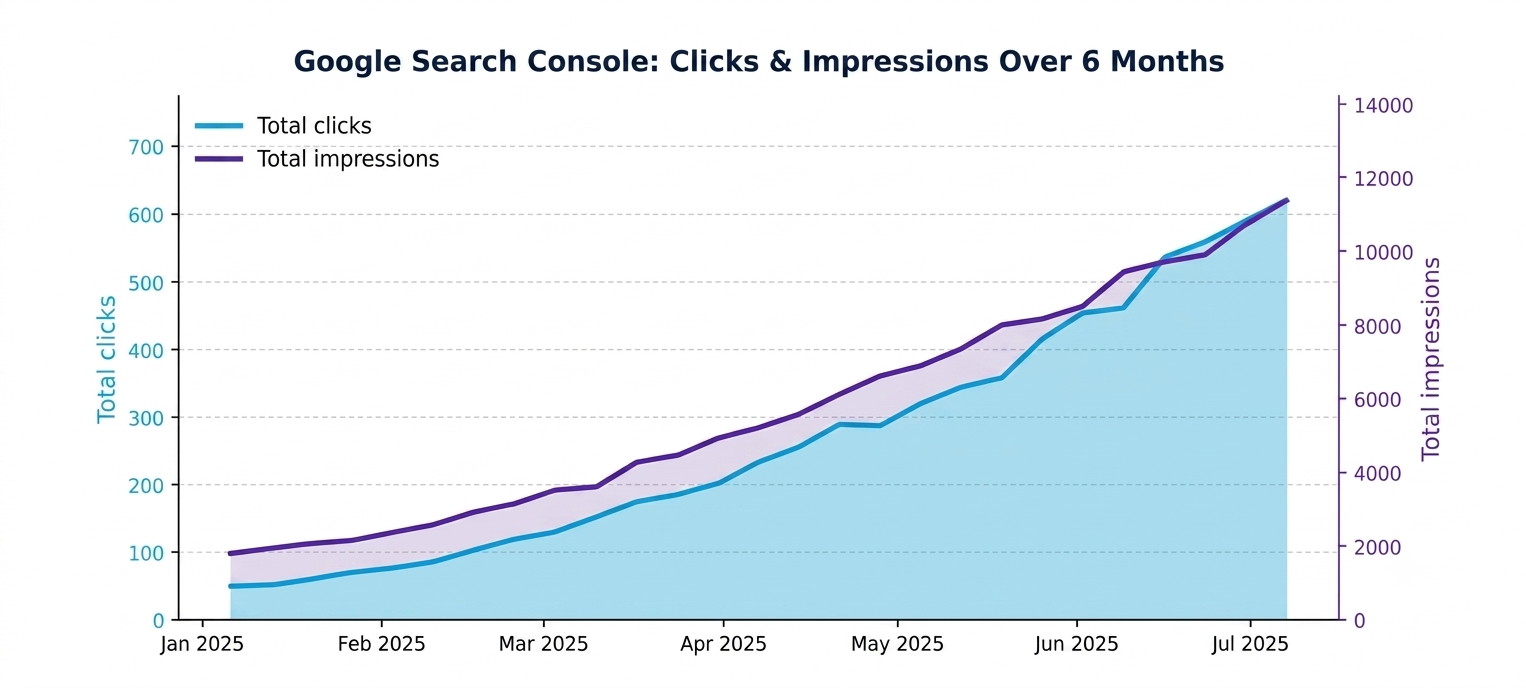
Six months in, the numbers validated the strategy across every KPI we set at the outset. As the per-technique charts above show, each lever compounded into the outcome rather than acting in isolation. The Google Search Console trend below captures the overall trajectory, with clicks and impressions both climbing steadily across the engagement: