

A complete dental SEO strategy connects treatment pages, technical improvements, content, internal links, local discovery and conversion tracking. The objective is not traffic alone. The objective is relevant visibility that can support qualified appointment enquiries.
Synopsis
SEO for dentists is the process of improving a dental practice’s visibility across Google Search and Google Maps. This guide covers patient search behaviour, website structure, local SEO, technical SEO, content, authority building, measurement and common mistakes. The final section presents verified figures from the SCIdent Implant and Dental Center case study.
Key Takeaways
- Patient intent matters
Dental SEO should support local, treatment, emergency, research and comparison searches.
- Pages need purpose
Dedicated treatment pages are more useful than placing every service on one general page.
- Local signals build trust
Google Business Profile, reviews and consistent citations influence local discovery.
- Technical quality converts
Speed, mobile usability and clear booking paths affect whether traffic becomes an enquiry.
What Is SEO for Dentists?
How Do Patients Search for Dentists Online?
Search behaviour changes with urgency and treatment complexity. Someone seeking emergency care may use a near-me search and call quickly. Someone evaluating implants or orthodontic treatment may compare costs, experience, reviews and treatment approaches over a longer period.
A dental website should therefore support local, treatment, informational and comparison searches. Local searches require location clarity. Treatment searches need detailed service pages. Informational searches require helpful articles and FAQs. Comparison searches require trust signals such as qualifications, reviews, patient education and clear next steps.
| Search intent | Example query | What the patient needs |
|---|---|---|
| Local | Dentist near me | Nearby clinic, ratings, directions and contact options |
| Treatment | Dental implants | Procedure, suitability, benefits and consultation information |
| Emergency | Emergency dentist near me | Fast access, availability and immediate contact |
| Informational | Does a root canal hurt? | A clear educational answer and reassurance |
| Comparison | Best dentist in [city] | Credentials, reviews, services and trust signals |
Why Is SEO Important for Dental Practices?
Patients now use search engines to compare clinics before making contact. A practice may have experienced dentists and modern facilities yet still lose enquiries if competing clinics appear more prominently or provide clearer online information.
SEO supports visibility across several patient moments. An urgent search may lead to an immediate call, while a treatment comparison may lead to several website visits before the patient books. Helpful pages allow the practice to remain visible throughout that process.
Core Components of SEO for Dentists
Treatment-page SEO
Technical SEO
Content marketing
Local discovery
Authority building
Conversion optimisation
Local SEO for Dentists
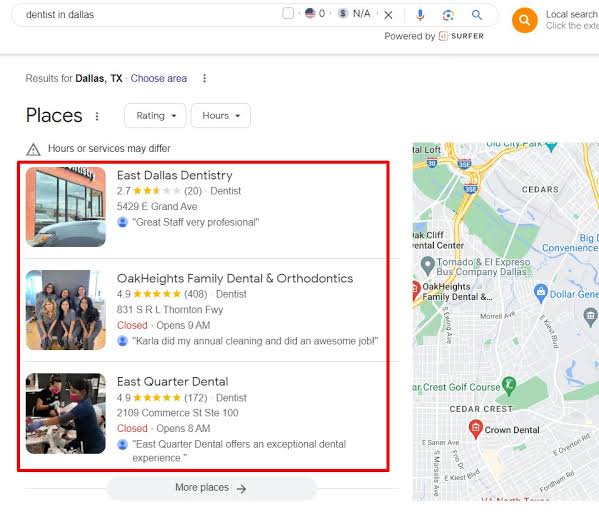
Local SEO is essential because most dental patients prefer a practice that is convenient to reach. Google often displays a map-based local pack above standard organic results, giving patients immediate access to ratings, directions, phone numbers and opening information.
Dentists should keep Google Business Profile complete and accurate, choose appropriate categories, add services and photos, publish updates and respond professionally to reviews. The practice name, address and phone number should remain consistent across healthcare directories and local listings.
Google Business Profile Checklist
- Use the most accurate primary and secondary categories.
- Keep the clinic name, address, phone number and opening hours current.
- Add priority services, appointment links and useful clinic photographs.
- Respond professionally to reviews without disclosing patient information.
- Maintain the Q&A section and publish relevant updates.
Dental Website SEO
A dental website should make it easy for patients and search engines to understand the practice. Each priority treatment should have a dedicated page instead of being compressed into one general services page. Separate pages can cover dental implants, root canal treatment, Invisalign, teeth whitening, veneers, crowns, paediatric dentistry and emergency care.
Each treatment page should explain who may need the service, how the treatment works, what the patient can expect, key benefits, consultation steps and relevant FAQs. Content should sound clear and patient-friendly rather than overly technical or aggressively promotional.
Internal links should connect related articles and treatment pages. An article about missing teeth can link to implants, bridges and dentures. A root canal article can link to the treatment page and emergency dental care. This structure improves navigation and helps search engines understand topic relationships.
Content Marketing for Dental SEO
Educational content allows a dental practice to appear before the patient is ready to book. Useful topics include treatment suitability, recovery, common concerns, procedure comparisons and preventive care. The content should answer the patient’s question first, then guide the reader towards the relevant treatment page or consultation option.
Examples include dental implant myths, root canal recovery, teeth whitening for sensitive teeth, braces versus Invisalign and guidance on when tooth pain requires urgent care. Content should be reviewed for accuracy and updated when information changes.
Practices planning a broader acquisition programme can also explore digital marketing for dentists, which combines search, content and other patient-growth channels.
Technical SEO for Dental Websites
Technical SEO creates the foundation for visibility and usability. A slow, difficult or poorly indexed website can limit the performance of strong content. Dental practices should monitor mobile responsiveness, page speed, crawlability, indexing, security, broken links, image optimisation and Core Web Vitals.
Mobile experience needs particular attention because many patients search and call from a phone. Contact buttons, booking forms, directions and service information should be easy to use on smaller screens. Structured data can provide additional context about the clinic, services, FAQs, articles and breadcrumbs.
SEO Strategy for Dentists
Audit the website.
Map patient search intent.
Improve treatment pages.
Publish supporting content.
Strengthen local visibility.
Measure outcomes.
SEO For Dentists- Videos
How to Measure Dental SEO Success
SEO should be evaluated by business impact as well as visibility. Keyword rankings and impressions help diagnose progress, but phone calls, appointment forms, consultation enquiries and treatment-page conversions show whether the strategy is generating value.
- Organic clicks and impressions for relevant queries
- Google Business Profile calls, website clicks and direction requests
- Treatment-page traffic and engagement
- Appointment form submissions and tracked phone calls
- Review growth and review quality
- Technical health, mobile performance and indexation
- Qualified enquiries by service and location
Common Dental SEO Mistakes to Avoid
- Keyword stuffing: Repeating keywords unnaturally reduces readability and patient confidence.
- Thin treatment pages: Short pages that do not answer patient questions are unlikely to support informed decisions.
- Duplicate location pages: Changing only a city name creates little local value.
- Ignoring Google Business Profile: An incomplete profile can reduce local discovery even when the website is well designed.
- Poor mobile experience: Slow pages and difficult forms can prevent high-intent visitors from enquiring.
- Tracking rankings only: Rankings without calls, forms or appointments do not demonstrate business impact.
How Long Does SEO Take for Dentists?
SEO is a long-term activity. Early work commonly focuses on audits, technical fixes, page structure and Google Business Profile. As new pages, content, reviews and authority signals accumulate, visibility may strengthen. The exact timeline depends on competition, website condition, existing authority and the consistency of implementation.
SEO Checklist for Dentists
- One clear H1 and search-focused title
- Dedicated treatment pages
- Accurate titles and meta descriptions
- Strong internal links
- Complete Google Business Profile
- Consistent citations and NAP details
- Ongoing review process
- Fast mobile experience
- FAQ and structured data where appropriate
- Conversion tracking for calls and forms
How ClinicSpots Digital Services Supported SCIdent Implant and Dental Center
The Challenge
The published SCIdent case study states that the clinic experienced a compromised domain, 404 errors, broken internal links, lost backlinks, reduced search visibility and unstable website infrastructure. These issues affected discoverability and the experience of potential patients.
What ClinicSpots Digital Services Did
- Supported domain migration and repaired broken URLs
- Improved mobile and desktop speed
- Addressed indexing and Core Web Vitals issues
- Compressed images and added ALT text
- Improved treatment pages and educational content
- Targeted treatment and location keywords
- Maintained Google Business Profile posting
- Built citations and secured relevant backlinks
- Improved calls to action, navigation and booking flow
Documented Lighthouse Indicators

Why Dentists Choose ClinicSpots Digital Services
ClinicSpots Digital Services works with healthcare brands, doctors, clinics and hospitals. For dental practices, the focus combines search visibility with patient-centred content, technical performance and clear enquiry pathways.
Want to Attract More Patients Through Search?
Frequently Asked Questions
What is SEO for dentists?
SEO for dentists is the process of improving a dental practice’s visibility in search engines so patients can find treatment information and nearby providers.
Why is local SEO important for dentists?
Local SEO helps dental practices appear in Google Maps and location-based searches used by nearby patients.
What do dental SEO services include?
Dental SEO services may include research, local SEO, on-page optimisation, technical improvements, content, citations, links and reporting.
Can dentists do SEO themselves?
Basic tasks can be managed internally, but technical, content and local SEO work often require specialist time and expertise.
Is SEO better than Google Ads?
SEO supports long-term organic visibility, while advertisements can provide faster paid exposure. A practice may use both depending on its goals.
How can a dentist rank higher on Google Maps?
A practice can improve local visibility by optimising Google Business Profile, reviews, citations, local pages and website quality.