

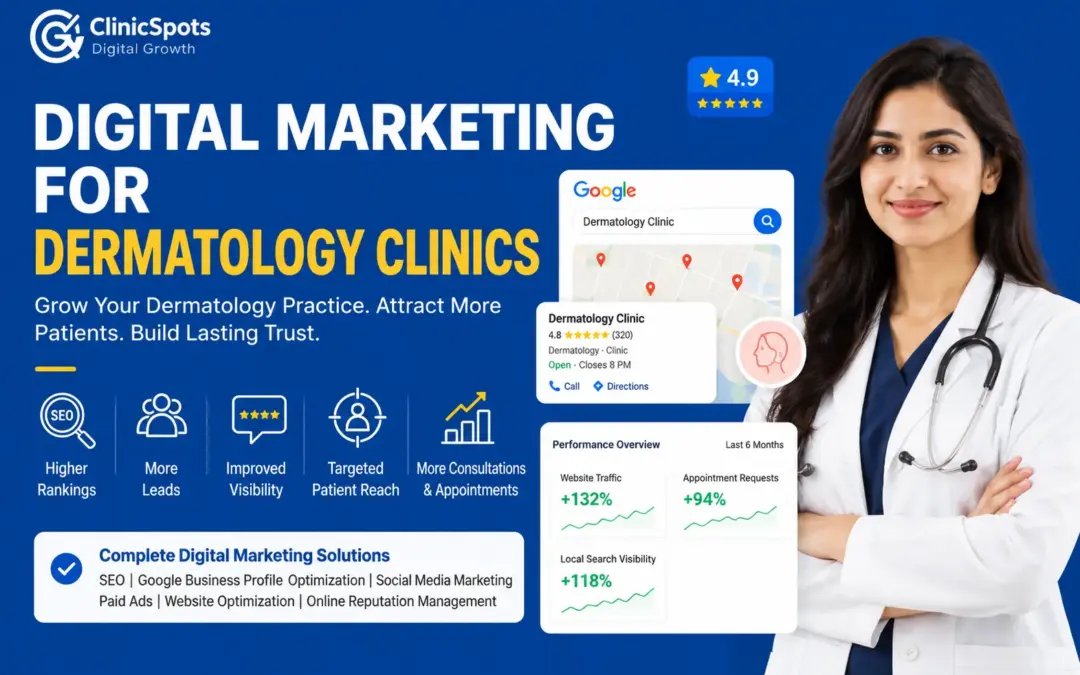
SEO for Dermatologists: Quick Summary
Most patients search online before booking a dermatology appointment. They compare nearby clinics, evaluate reviews, research treatments and assess doctor expertise before making a decision. This guide explains how SEO helps dermatologists improve local visibility, attract qualified patients and build long-term authority.
Local SEO Matters
Google Maps and Google Business Profile optimisation are essential for nearby patient discovery.
Patients Research First
People explore symptoms, conditions and treatments before contacting a dermatologist.
Doctor Authority Builds Trust
Complete profiles, qualifications and expertise signals strengthen confidence.
Educational Content Supports Growth
Condition pages, treatment guides and FAQs answer real patient questions.
Reviews Influence Decisions
Authentic reviews support patient trust and local visibility.
AI Search Is Changing Discovery
Structured, trustworthy and expert-led content is increasingly important.
Introduction
When someone has persistent acne, eczema, hair loss, pigmentation or a cosmetic concern, the search for answers often begins online. Patients compare nearby clinics, read reviews, check a dermatologist’s experience and look for clear information before deciding whether to book.
SEO for dermatologists helps a practice appear during those moments. It improves how search engines understand the website, how easily patients find local services and how confidently visitors move from a question to an appointment. The goal is not traffic for its own sake. It is relevant visibility for the conditions, treatments and locations the clinic actually serves.
Why SEO Matters for Dermatologists
Dermatology combines medical, surgical and cosmetic services, so search behaviour is unusually varied. One person may look for an eczema specialist, while another compares laser treatment, acne-scar care or a skin screening. A useful SEO strategy gives each need a clear path.
- Improves visibility for dermatologists, skin clinics and specific treatments nearby.
- Attracts people already researching a condition, procedure or provider.
- Builds trust through useful content, complete doctor profiles, accurate clinic information and patient reviews.
- Supports long-term organic visibility beyond paid campaigns.
- Improves the mobile experience, where many local searches begin.
Expert insight: Google Search Central recommends helpful, reliable, people-first content with clear evidence of expertise. For a dermatology website, that means patient-focused explanations, transparent authorship and appropriate medical review.
The Main Areas of Dermatology SEO
Competitor guides consistently focus on a small group of fundamentals: local SEO, patient-intent keywords, useful content, website experience, doctor authority, reviews, backlinks and performance tracking. These areas matter more than adding dozens of thin sections or repeating the same advice in different formats.
1. Local SEO and Google Business Profile
Local SEO helps a practice appear when someone searches for a dermatologist in a city, neighbourhood or “near me”. Google Business Profile is often one of the first results a patient sees, so the clinic name, address, phone number, hours, category and website link should be accurate and consistent.
- Choose the most accurate primary and secondary categories.
- List important medical and cosmetic dermatology services clearly.
- Add authentic clinic, facility and team photographs.
- Keep appointment links, opening hours and contact details current.
- Request genuine reviews ethically and respond without revealing private information.
Dermatology practices can apply the principles used in Local SEO Services for Clinics and Hospitals to improve Maps visibility and nearby patient discovery.
2. Choose Keywords Around Patient Intent
Keyword research should begin with what the patient wants to accomplish. Broad phrases such as “dermatologist near me” may lead to the homepage or a location page. Searches for acne, eczema, psoriasis, hair loss or pigmentation usually need condition pages. Queries about laser hair removal, chemical peels or acne-scar procedures need focused treatment pages.
3. Build Useful Condition and Treatment Pages
Condition pages should explain the concern in patient-friendly language, clarify when professional evaluation may be appropriate and connect the reader with a relevant service. Treatment pages should cover consultation, suitability, preparation, what happens, aftercare, downtime and realistic expectations.
4. Publish Patient-Focused Content
Educational articles can answer recurring questions about acne, eczema, sun damage, hair loss, pigmentation, seasonal skin care and procedure aftercare. Practices that need a consistent editorial process can use Healthcare Content Writing Services to align clinical expertise with readable patient communication.
5. Strengthen Dermatologist Profiles and Expertise
Patients often evaluate the dermatologist before the clinic. A complete profile should show qualifications, certifications, clinical focus, locations, professional affiliations and the content written or reviewed by the dermatologist.
6. Improve Technical and Mobile Performance
- Use one clear H1 and logical subheadings.
- Compress images and use accurate alt text.
- Fix broken links, duplicate pages and indexing issues.
- Improve Core Web Vitals and mobile usability.
- Use relevant structured data where appropriate.
7. Build Reviews and Relevant Authority
Reviews influence patient confidence and local visibility. Authority can also grow through accurate citations, useful educational resources, local partnerships and relevant healthcare mentions. Healthcare Link Building Services can support outreach around credible healthcare and local sources.
8. Prepare for AI-Assisted Search
AI-assisted search increases the value of direct answers, consistent clinic information, transparent expertise and clearly connected entities. Healthcare AI SEO can complement traditional dermatology SEO by improving how search and generative systems understand the practice.
Practical SEO Strategies for Dermatologists
- Separate medical and cosmetic dermatology into clear pathways.
- Prioritise important service pages before producing a large volume of new content.
- Build condition and treatment hubs around genuine patient questions.
- Optimise Google Business Profile and keep clinic information consistent.
- Expand dermatologist profiles and add authorship or review information.
- Fix mobile, speed, crawling, indexing and internal-linking issues.
- Develop an ethical review process.
- Track calls, forms and appointments, then improve pages using the results.
How to Measure Results
- Local and organic visibility for priority services and locations.
- Visits to condition, treatment, doctor and location pages.
- Calls, appointment forms and booking-link clicks.
- Google Business Profile actions, reviews and direction requests.
- Mobile performance, indexing health and conversion issues.
Common SEO Mistakes
- Using one generic page for every condition and treatment.
- Mixing medical and cosmetic intent without clear navigation.
- Publishing thin or repetitive location pages.
- Leaving dermatologist profiles incomplete.
- Publishing clinical content without clear ownership or review.
- Ignoring reviews, mobile experience or page speed.
- Measuring traffic without tracking calls, forms or appointments.
Case Study: SkynLab Dermatology
The published SkynLab Dermatology case study shows how a connected programme can improve a dermatology practice’s digital foundation. The work covered website and mobile optimisation, technical SEO, keyword research, service-page improvements, patient-focused content, local SEO and authority building.


About ClinicSpots Digital Services
ClinicSpots Digital Services is a healthcare-focused digital marketing company that helps hospitals, clinics, doctors and healthcare brands improve search visibility, content quality, website experience and digital authority. The approach connects SEO with patient education and measurable actions rather than focusing on rankings alone.
Improve Your Dermatology Practice’s Search Visibility
A focused audit can identify the strongest opportunities across local search, condition and treatment pages, technical SEO, reviews and performance tracking.
Frequently Asked Questions
What is SEO for dermatologists?
It is the process of improving a dermatology practice’s visibility across organic search, local results, Google Maps and AI-assisted discovery.
Why is local SEO important for a dermatology clinic?
Many patients search for nearby care. Local SEO helps a practice appear for city, neighbourhood and “near me” searches.
What pages should a dermatology website create?
Useful priorities include condition pages, treatment pages, doctor profiles, location pages, FAQs and patient-focused articles.
How should a dermatology practice measure SEO?
Track relevant visibility alongside calls, booking clicks, appointment forms, Google Business Profile actions and qualified enquiries.
How long does dermatology SEO take?
Timing varies according to competition, the current website, local visibility, content quality, authority and the consistency of implementation.